Aliko Dangote and the Push to Build Africa at African Scale
From Nigeria to Kenya, Aliko Dangote is pushing an industrial vision built around one central idea: Africa should produce more of what it consumes. Now, a proposed multibillion-dollar refinery in Lamu is putting that ambition — and its challenges — firmly back in the spotlight.
For decades, one of the defining challenges facing African economies has been a familiar contradiction: a continent rich in natural resources continues to import large quantities of the finished products it consumes.

For Nigerian industrialist Aliko Dangote, changing that equation has become central to his business philosophy.
His journey - from trading commodities to building one of Africa’s largest industrial groups, is also the subject of a four-part branded series by CNN Create, produced in partnership with the Dangote Group.
But the conversation around Dangote is no longer simply about what he has already built. His expanding ambitions across the continent are raising a much larger question: what would it actually take to industrialise Africa at African scale?
From trading to manufacturing
Dangote’s business story did not begin with giant factories or oil refineries.
He built his early business through trading before gradually shifting towards manufacturing - a transition based on a straightforward question: why continue importing products that could be manufactured in Africa?
That philosophy eventually pushed the Dangote Group into industries including cement, food production, fertiliser and energy.
Today, its industrial footprint stretches across several African markets.
But the significance of that expansion goes beyond the growth of one company. It touches on a much bigger economic question facing the continent: how does Africa move from being primarily a supplier of raw materials and a consumer of imported goods towards becoming a major producer itself?
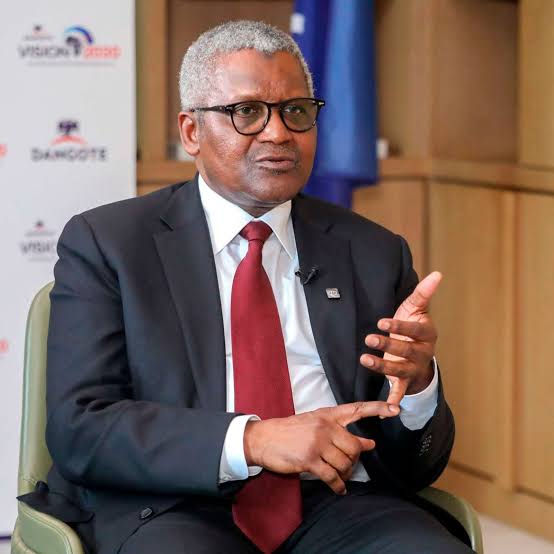
Producing what Africa consumes
Africa's industrialisation challenge remains substantial.
Manufacturers across the continent continue to contend with infrastructure gaps, unreliable electricity, expensive financing, transport costs and fragmented supply chains.
Dangote has repeatedly argued that African economies cannot create sufficient employment and sustainable prosperity without dramatically expanding their productive capacity.
Perhaps the most visible demonstration of that philosophy is the Dangote Petroleum Refinery in Lagos, Nigeria.
The enormous project was conceived against a striking contradiction: Nigeria is one of Africa’s major crude-oil producers, yet for years the country remained heavily dependent on imported refined petroleum products.
The refinery represents the model Dangote has increasingly championed - processing African resources closer to home, creating industrial capacity on the continent and retaining more of the resulting economic value within African economies.
From Lagos to Lamu: a $16 billion Kenya ambition
That industrial vision is now extending dramatically into East Africa.
Dangote has announced plans for a major new refinery development in Lamu, Kenya, with investment estimated at around $16 billion.
The proposed refinery would be developed in the Lamu Port area on Kenya's mainland coast, rather than on historic Lamu Island, which is internationally known for Lamu Old Town and its tourism industry.
The scale of the proposal is significant. Plans envisage refining capacity of approximately 700,000 barrels per day, potentially positioning the facility as a major supplier of petroleum products not only to Kenya but to the wider East African market.
For Kenya, the project could form part of a broader attempt to strengthen domestic and regional industrial capacity, reduce dependence on imported refined petroleum products and establish Lamu as an increasingly important trade and energy hub.
But Lamu also demonstrates why building major infrastructure in Africa can be complicated.
The wider county contains environmentally sensitive coastal and marine ecosystems and communities whose livelihoods and land rights are closely connected to the area. Large infrastructure projects around Lamu have previously generated debate over land, environmental protection and the impact of development on local communities.
Security is another part of the equation.
Lamu County stretches north towards Kenya's border with Somalia and parts of the mainland have experienced attacks and security incidents associated with Al-Shabaab. Kenya has maintained a significant security presence in the region, particularly around strategic infrastructure.

This creates a striking contrast.
Historic Lamu Island and neighbouring Manda Island remain established tourism destinations, while parts of mainland Lamu County are subject to considerably stronger security warnings from foreign governments.
Building one of Africa's largest industrial projects in this environment would therefore require much more than capital. Security, transport infrastructure, environmental safeguards, community engagement and regional cooperation will all matter if the project progresses as envisaged.
In that sense, Lamu could become a real-world test of the very idea Dangote is promoting: building Africa at African scale.
Beyond Nigeria and Kenya
Dangote's industrial ambitions have never been limited to one country.
The group has developed operations and investments across several African markets, particularly through its cement business, while its longer-term strategy points towards further expansion in energy, manufacturing and other infrastructure-intensive industries.
The underlying argument is increasingly relevant across the continent.
Africa possesses many of the raw materials required by the global economy, yet significant portions of those resources leave the continent before being processed into higher-value products.
Changing that model requires much more than individual entrepreneurs.
It requires reliable electricity, ports, roads and railways, access to capital, skilled workers, functioning regional markets and public policies capable of supporting competitive industries.
The African Continental Free Trade Area (AfCFTA) could also become an important part of that equation by creating a much larger market for goods manufactured within Africa.

Building at African scale
The phrase “Africa First” features prominently in Dangote's current industrial philosophy.
In the CNN Create branded feature, his story is presented around investment on the continent and building industries capable of creating wealth and employment within Africa.
But Africa's industrial future will ultimately be much bigger than Dangote.
No single businessman, company or government can industrialise a continent of more than a billion people.
The deeper question is whether Africa can create an environment in which thousands of manufacturers, entrepreneurs and investors can build businesses at scale — from food processing and pharmaceuticals to technology, energy, textiles, automobiles and advanced manufacturing.
That also means confronting difficult questions.
Who benefits from enormous industrial developments? How are local communities protected? How should governments balance industrialisation with environmental protection? Can African businesses compete without creating excessive market concentration? And can infrastructure keep pace with industrial ambition?
These questions become particularly important when projects reach the scale now being discussed for Lamu.
Who will build Africa's industries of the future?
Africa's economic story has too often been framed around what the continent possesses underground.
The next chapter may depend much more heavily on what Africa can build above it.
From the vast Dangote refinery in Lagos to the proposed multibillion-dollar development in Lamu, the scale of ambition is changing.
But industrialisation cannot simply mean building bigger projects. Its success will ultimately be measured by whether those investments create jobs, strengthen African supply chains, develop skills, stimulate other businesses and allow more economic value to remain on the continent.
Dangote's journey offers one prominent example of what African industrial ambition can look like.
The bigger story, however, belongs to Africa.
Can the continent move from exporting resources and importing finished products towards producing, refining and manufacturing at scale?
And perhaps most importantly:
Who will build Africa's industries of the future?
The CNN Create series referenced in this article is branded commercial content produced in partnership with Dangote Industries. Africa First Magazine is not affiliated with CNN Create or the Dangote Group.
Africa First Magazine | Business & Economy


Comments